How to Get Money Out of Your House Without Selling

Semi-detached property - Assets For Life

Your home could be worth considerably more than the amount you originally paid for it. As you repay your mortgage and property values change, you may build up equity that you can access without putting your house on the market.

So, how can you get money out of your house without selling? There are several good options. However, each one involves costs, risks, and lending criteria that need careful consideration.

Key Takeaways

  • – What Is Home Equity?
  • – How to Get Money Out of Your House Without Selling
  • – Can You Release Equity to Invest in Property?
  • – Comparing Ways to Use Released Equity
  • – Why Expert Guidance Matters in a Volatile Market

What Is Home Equity?

Before looking at how to access money from your property, it helps to understand what equity means.

Your home equity is essentially the portion of the property you own outright. It is calculated by taking the current market value of your property and subtracting the outstanding mortgage balance.

For example, suppose your home is currently worth £300,000, and you have £180,000 remaining on your mortgage. Your equity would be approximately £120,000.


How to Get Money Out of Your House Without Selling


1. Remortgage to Release Equity

A remortgage involves replacing your existing mortgage with a new one. Depending on your circumstances, you may be able to borrow more than you currently owe and receive the difference as cash.

The money could potentially be used for home improvements, investment, or other purposes permitted by the lender.

However, borrowing more against your property means taking on additional debt. You should consider the new interest rate, monthly repayments, fees, and any early repayment charges on your existing mortgage.


2. Take a Further Advance

Rather than replacing your mortgage entirely, you can borrow additional money from the same lender. This is useful if you need capital for a specific purpose and your lender is willing to offer additional borrowing.

The amount available will depend on factors such as your income, existing mortgage balance, property value, affordability, and the lender’s criteria.

It is worth comparing the cost of a further advance with other options before making a decision. A lower interest rate on your existing mortgage does not necessarily mean additional borrowing will be the cheapest route.


3. Use a Secured Loan

A secured loan, sometimes called a second-charge mortgage, allows you to borrow money using your property as security while keeping your existing mortgage in place.

However, secured borrowing can be expensive, and your home is used as security for the debt. If you cannot maintain the repayments, there is a risk of serious financial consequences, including repossession.

Always consider whether the additional borrowing is affordable over the full term and compare the total cost with other available options.

Can You Release Equity to Invest in Property?

For property investors, accessing equity can be more than a way to raise personal cash. It can potentially become a source of capital for growing a property portfolio.

This is one of the principles behind strategies such as BRR, or Buy, Refurbish, Refinance.

An investor might purchase a property, improve it, refinance it based on its new value, and potentially use some of the released capital toward another investment.

However, leverage needs to be approached carefully. Releasing equity does not create free money. You are increasing the amount borrowed against the property, which means higher debt and potentially higher monthly repayments.

The investment therefore needs to make financial sense after considering mortgage costs, taxes, maintenance, void periods, and other expenses.


Comparing Ways to Use Released Equity

Different approaches carry different levels of potential return, complexity, and risk. The following table provides a general comparison rather than financial advice.


Investment option

Potential use of released equity

Potential benefit

Key consideration

Buy-to-let property

Deposit and purchase costs

Rental income and potential capital growth

Mortgage costs, vacancies, maintenance, and tax

Property refurbishment

Fund renovations that add value

Potential to increase property value

Renovation costs can exceed the original budget

Buy, Refurbish, Refinance (BRR)

Fund acquisition and refurbishment

Potential to recycle capital into another property

Relies on successful refinancing and suitable valuations

Property development

Contribute to development costs

Potential for higher returns from development

Greater capital requirements and development risk

Home improvements

Fund renovations to your own home

May improve usability and property value

Not every improvement adds equivalent market value

Debt consolidation

Repay certain existing debts

Could simplify finances

Debt becomes secured against your property


The right option depends on your objectives, financial position, and tolerance for risk. 

Releasing equity increases borrowing against your property. Thus, potential returns should always be weighed against interest, fees, taxes, and the possibility that property values or rental income could fall.


How Much Equity Can You Release?

There is no universal amount that every homeowner can withdraw.

The amount you can potentially release depends on several factors, including:

  • – Your property’s current market value
  • – Your outstanding mortgage balance
  • – Your income and affordability
  • – Your credit history
  • – The lender’s maximum LTV
  • – Your existing mortgage terms
  • – The purpose of the borrowing
  • – Current mortgage rates
  •  

This is why understanding your LTV is particularly important when considering how to release equity. A lower LTV can potentially provide access to more competitive mortgage products.


Why Expert Guidance Matters in a Volatile Market

The UK property market has experienced significant swings in recent years, from double-digit annual house-price growth during the pandemic to a period of falling prices in 2023. 

More recently, the market has returned to modest growth, highlighting how quickly conditions can change.

UK House Price Index, HM Land Registry and Office for National Statistics - Assets For Life

Source: UK House Price Index, HM Land Registry and Office for National Statistics.

Without a clear understanding of the market, homeowners and investors could underestimate borrowing costs, overlook alternative options, or take on more risk than they intended.

This is where property education can make a difference. Assets For Life helps homeowners and investors understand property finance, investment strategies, and changing market conditions, giving them the knowledge to make more informed decisions.


Frequently Asked Questions


Is releasing equity the same as selling my house?

No. Equity release through borrowing allows you to remain the owner of the property. However, you are taking on additional debt secured against your home.


Can I use released equity to buy another property?

Potentially, yes. Property investors may use released equity as a deposit or source of capital for another investment. The amount available and permitted use will depend on the lender and your financial circumstances.


Does remortgaging affect my monthly payments?

It can. If you increase your borrowing, your repayments may rise. However, your new mortgage rate, term, and overall circumstances will determine the actual cost.


Is releasing equity a good idea?

It depends on why you are borrowing and whether the repayments are affordable. Using equity for a carefully planned investment may have a different financial rationale from borrowing for discretionary spending.


Picture of Liam Ryan
Liam Ryan

Liam J Ryan is a Forbes-featured, 8-figure property business entrepreneur, best-selling author, mentor, host, and co-founder of Assets For Life.

More About Liam

You May Also Be Interested In...

Featured Property Investment Events & Courses

The Property Deal Packaging Summit

The Property Millionaire Bootcamp

The Serviced Accommodation Bootcamp

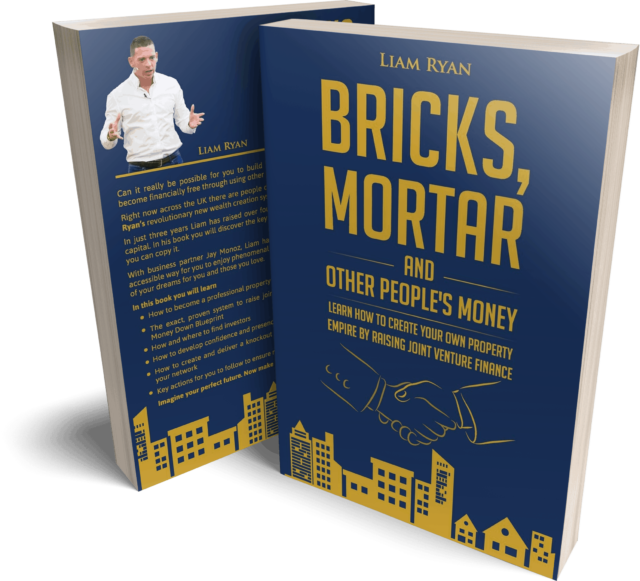
Bricks-Mortar-Book

Liam Ryan's
Best Selling Book

Claim Your Free Copy

Assets For Life
Privacy Overview

This website uses cookies so that we can provide you with the best user experience possible. Cookie information is stored in your browser and performs functions such as recognising you when you return to our website and helping our team to understand which sections of the website you find most interesting and useful.